
In many industrial settings, the use of ferrous materials such as steel presents limitations when faced with specific technical requirements. It is in this context that non-ferrous wires take center stage, thanks to properties such as high electrical conductivity, corrosion resistance, and lack of magnetism.
We take a look at the main types of non-ferrous wire used in industry, their functional characteristics, and the standards that regulate their production and use.
Why Use Non-Ferrous Wires?
The term “non-ferrous” refers to metals and alloys that do not contain iron as a main component. This results in physical and mechanical behaviors that differ greatly from those of conventional steels.
Key technical properties include:
- High electrical and thermal conductivity (copper, aluminum)
- Stable behavior in the presence of chemicals and moisture (bronze, brass)
- Lightweight (aluminum) for applications where weight is a critical factor
- High cold formability, essential in deep drawing or bending processes
These materials are selected for their functionality, reliability, and specific performance in the intended application environment.
Main Non-Ferrous Materials in Industrial Wire
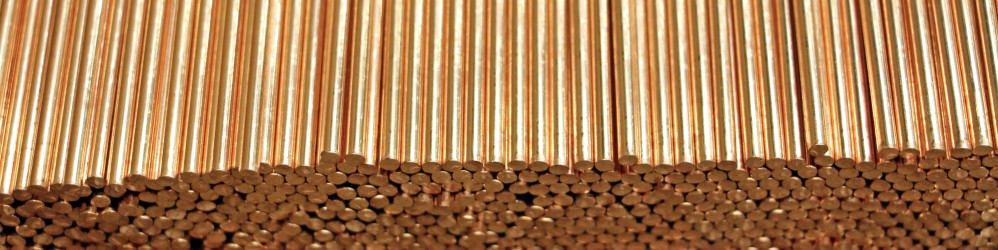
Copper (Cu-ETP, Cu-OF)
- Standard: EN 13602
- Used for its excellent electrical conductivity (up to 100% IACS)
- Cu-OF (oxygen-free) is ideal for environments where surface oxidation is critical (e.g. welding, high vacuum)
- Found in electrical coils, electronic components, and industrial connectivity
Brass (CuZn37, CuZn38Pb2, CuZn39Pb2)
- Standard: EN 12166
- Combination of copper and zinc, with or without lead
- Applied where good machinability, moderate mechanical strength, and corrosion resistance are required
- Common in fasteners, valves, fittings, and turned parts
Bronze (CuSn6, CuSn8)
- Standard: EN 12166
- Offers high resilience, elasticity, and dimensional stability
- Suitable for flat springs, electrical contacts, and precision mechanisms
Aluminum and Alloys (1050A, 2024, 5754, 6082, 7075, etc.)
- Standard: EN 573-3
- Lightweight, with good specific strength and stable performance in aggressive environments
- Used in heat exchangers, lightweight structures, HVAC components, and the food industry
Standards and Supply Formats for Non-Ferrous Wires
Non-ferrous wires are manufactured in compliance with international standards such as:
- EN 13602: copper for electrical applications
- EN 12166: brass, bronze, and copper alloys
- EN 573-3: aluminum alloys
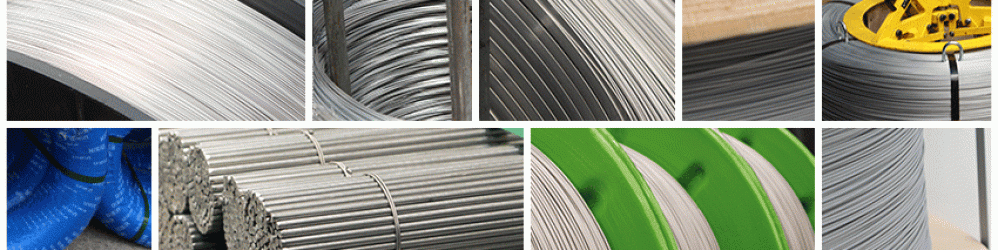
The material can be supplied in hardness states ranging from annealed to spring temper, and formats include round, flat, square, or profiled wire. Packaging options include coils, spools, plastic reels, or rods.
Common Industrial Applications
- Copper – Transformers, power electronics, connectors
- Brass – Valves, fittings, decorative elements, fasteners
- Bronze – Clips, springs, contact elements
- Aluminum – HVAC, structures, exchangers, chemical industry
The choice of material depends not only on the application environment, but also on the manufacturing method and final service conditions (temperature, fatigue, corrosion, etc.).
In a context where materials engineering is increasingly specialized, understanding the technical behavior of non-ferrous metals is essential for making informed decisions.
Non-ferrous wire offers solutions in scenarios where standard steels fall short—from electrical transmission to mechanical precision and structural lightness. Understanding their properties and associated standards is key to integrating them effectively into demanding industrial processes.